Turn Self-Awareness Into Meaningful Change

There is a special kind of relief that comes when something finally makes sense.
You look back at a relationship, a decision, a repeated disappointment, or a familiar emotional spiral and think, “Oh. That’s what I’ve been doing.” The pattern that once felt confusing suddenly has a shape. You can name it. You can see how it started, why it keeps showing up, and what it has cost you.
That moment matters. Insight can feel like the ground shifting beneath your feet. It can bring peace, validation, and even hope.
But insight is only the beginning.
Self-awareness opens the door. Meaningful change asks you to walk through it. That next step is where reflection, choice, support, and practice begin to matter. The goal is not to become someone entirely new overnight. The goal is to respond to life with more honesty, intention, and trust in yourself.

Why insight can feel like transformation before anything changes
Insight is powerful because it gives language to something that may have felt vague or heavy for a long time.
Maybe you realize you withdraw whenever conflict appears. Maybe you notice you keep choosing people who need rescue, then feel resentful when your own needs go unmet. Maybe you finally see that your fear of being judged has been quietly shaping your choices.
That kind of recognition can feel freeing. It can bring an immediate emotional release because your experience no longer feels random. You can connect the dots:
The same type of situation keeps activating the same fear.
The same belief keeps shaping your decisions.
The same reaction keeps creating the same result.
This is often the moment people mistake awareness for completion. They think, “Now that I understand it, everything will be different.”
Sometimes it will be. Often, it takes more.
Patterns are not just thoughts. They can live in habits, nervous system responses, expectations, conversations, and choices made over many years. Knowing why something happens does not automatically mean you know what to do differently when the moment arrives again.
That does not make the insight less valuable. It simply means the insight needs somewhere to go.
Awareness is the light. Change is what you practice once you can see.
To turn self-awareness into meaningful change, you need a process that helps you move from recognition to response.
Notice the pattern that keeps repeating
The first step is to observe what keeps showing up in your life. Not with panic. Not with shame. Just with honesty.
A pattern is often easier to see when you describe it plainly. Instead of saying, “I always ruin things,” try asking what actually happens.
Maybe the pattern sounds like this:
I overextend myself, then feel unseen.
I avoid hard conversations, then feel misunderstood.
I say yes too quickly, then feel trapped.
I attract intense connections, then feel emotionally drained.
I wait for someone else to choose me before I choose myself.
The more specific you can be, the more useful the awareness becomes.
Start with three simple questions.
What keeps repeating?
Look at the situations that feel familiar, even when the people or details change. Repetition is not always failure. Sometimes it is information asking for your attention.
If you keep ending up in relationships where you feel like you must earn love, that is a pattern. If you keep taking on more than you can carry, that is a pattern. If you keep silencing yourself to keep the peace, that is a pattern.
You are not looking for a reason to blame yourself. You are looking for the thread.
What triggers the same response?
A trigger is not only something dramatic. It can be a tone of voice, a delayed text, a sense of being ignored, a look on someone’s face, or a situation where you feel out of control.
Notice what happens inside you.
Do you shut down? Explain too much? Try to fix everything? Become cold? Chase reassurance? Assume rejection? Say you are fine when you are not?
Your response may have once protected you. That is important. Many patterns begin as survival strategies. They helped you get through something, belong somewhere, avoid conflict, or manage uncertainty.
But a response that once protected you may now be limiting you.
What are you beginning to recognize?
This question creates space for compassion. You may be recognizing that you want more than you have allowed yourself to want. You may be seeing how much you have tolerated. You may be realizing that your intuition was speaking long before you felt ready to listen.
Recognition is the beginning of choice.
Once you can say, “This is what happens,” you can begin to ask, “What else could happen?”

Reflect without judging yourself
Self-awareness can become painful when it turns into self-criticism. Many people move from “I see the pattern” to “What is wrong with me?” very quickly.
That question rarely leads to healing. It usually leads to shame.
Reflection works better when it is curious, honest, and kind. You can take responsibility without attacking yourself. You can name an unhealthy pattern without making your whole identity revolve around it.
Try shifting from judgment to inquiry.
Ask yourself:
What is this situation teaching me?
What have I been tolerating?
What do I actually want?
What belief may be influencing my choices?
What am I afraid would happen if I chose differently?
Where have I abandoned my needs to avoid discomfort?
What part of me is asking to be heard?
These questions help you move beneath the surface. They also slow down the urge to react.
For example, maybe you notice that you keep accepting less effort than you desire in relationships. Judgment might say, “I am weak for allowing this.”
Reflection might say, “I have been afraid that asking for more would cause someone to leave. I am learning that my needs are not too much.”
That shift matters.
One statement traps you in shame. The other gives you a place to grow.
Reflection does not excuse harmful choices. It helps you understand the belief, fear, or wound beneath them so you can choose differently next time.
A useful journaling practice is to write the same situation from two angles.
First, write what happened. Keep it simple and factual.
Then write what the situation brought up in you. This is where you name the feeling, the fear, the memory, or the belief.
For example:
What happened Someone did not respond to my message until the next day.
What it brought up I felt dismissed. I started to believe I was not important. I wanted to pull away before they could reject me.
That kind of reflection builds emotional honesty. It helps you separate the present moment from the story your past may be adding to it.
Choose one different response
Meaningful transformation does not require changing everything today.
In fact, trying to change everything at once can make growth feel impossible. The nervous system often does better with small, repeated choices than with dramatic promises. One different response can begin to reshape a pattern.
Ask:
What is the smallest choice I could make differently?
Small does not mean insignificant. Small choices are often where change becomes real.
If your pattern is overexplaining, one different response might be pausing before you defend yourself.
If your pattern is saying yes when you mean no, one different response might be asking for time before you answer.
If your pattern is chasing reassurance, one different response might be placing your hand on your heart, breathing, and asking, “What do I know to be true right now?”
If your pattern is avoiding honest conversations, one different response might be sending a simple message: “I would like to talk about something that has been on my mind.”
The power is in the pause between awareness and action.
That pause gives you room to ask:
What am I feeling?
What am I assuming?
What do I need?
What would honor me without harming someone else?
What choice supports the person I am becoming?
This is where self-awareness becomes practice.
You will not always get it right. Growth is rarely neat. There may be days when the old pattern wins before you even realize what happened. That does not erase your progress.
When that happens, return to awareness without punishment. Ask, “What can I learn from this?” Then choose again.

Where readings can help you see with fresh eyes
Readings can be beautiful tools for insight and reflection when they are used with care.
Tarot, astrology, numerology, angel readings, and oracle readings can offer language, symbolism, and perspective. They can help you look at a situation from another angle. They may bring forward themes you have been sensing but have not yet named.
A reading might help you explore questions like:
What cycle am I moving through?
What lesson is asking for my attention?
Where am I giving away my power?
What energy am I bringing into this situation?
What part of myself am I being invited to trust?
The key is to remember that a reading is not a substitute for your agency.
A helpful reading does not take your choice away. It supports your relationship with your own inner knowing. It can bring clarity, but you still decide what to do with that clarity.
For example, a tarot reading may highlight a pattern of emotional exhaustion. Astrology may help you understand a season of identity change or relationship reflection. Numerology may point to themes of completion, independence, or rebuilding. Oracle or angel cards may offer encouragement when you feel uncertain.
The reading can open a doorway. You still choose how to walk through it.
When used this way, spiritual tools support self-trust. They do not ask you to hand your power to the cards, the chart, the numbers, or the reader. They help you listen more closely to the wisdom already moving within you.
Where coaching can help turn understanding into action
Coaching becomes the bridge between “I understand” and “Now I am going to do something with what I understand.”
That bridge matters because insight can fade if it is not supported by action. You may have a powerful realization during a reading, meditation, conversation, or journaling session, then return to daily life and feel pulled back into the same habits.
Coaching helps you stay with the insight long enough to make it practical.
In Spiritual Life Coaching, the focus is not only on what you see. It is also on how you live from that awareness. The work may include clarifying what you want, naming what no longer fits, setting gentle but honest goals, and practicing new responses in real situations.
Coaching can support you when you are ready to ask:
What do I do with this awareness?
What choice aligns with who I am becoming?
What boundary needs to be honored?
What support do I need to stay consistent?
What old story am I ready to stop organizing my life around?
This is where change becomes grounded. You move from reflection into real conversations, decisions, boundaries, habits, and self-trust.
A reading may help you see the pattern. Coaching can help you practice a new one.
Both can support your growth in different ways. Insight gives you perspective. Coaching helps you build follow-through.

A Transformation Tuesday journal practice
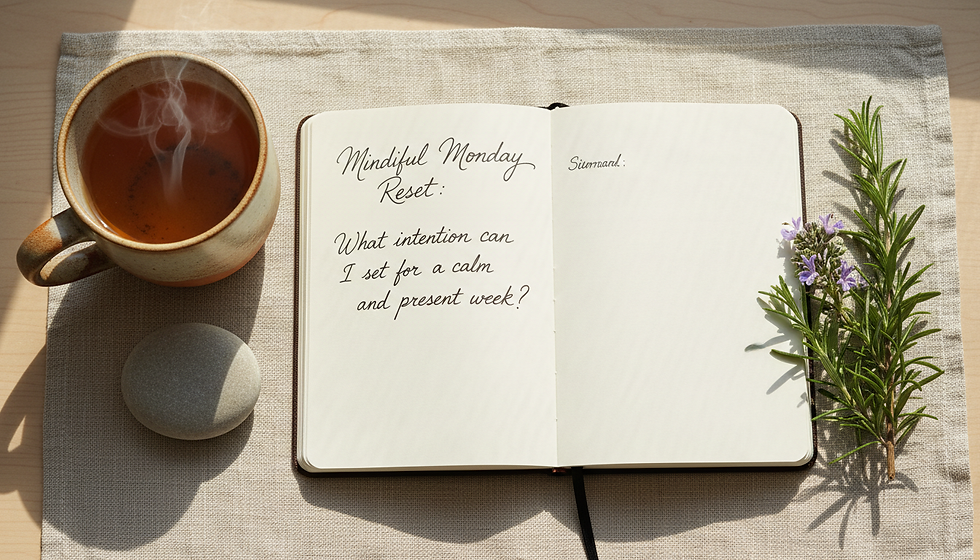
Transformation Tuesday is a simple way to check in with yourself once a week. It gives your awareness a place to land and your intentions a place to grow.
You do not need a long ritual. You only need a quiet moment, a journal, and enough honesty to listen inward.
Start by taking a few slow breaths. Think about the past few days. Notice any repeated feelings, conversations, decisions, or reactions. Then write without trying to make it sound perfect.
Use this prompt:
What am I becoming more aware of, and how would the version of me I am becoming respond differently?
Let the answer be real.
You might write about a boundary you are learning to hold. You might notice a desire you have been minimizing. You might admit that a certain situation no longer feels aligned. You might recognize a softer truth, such as, “I am learning that I do not have to prove my worth by being available to everyone.”
After journaling, repeat this affirmation:
I trust myself to turn awareness into intentional action.
Say it slowly. Let it be a commitment, not pressure.
Then choose one small action for the week. Keep it specific.
Maybe you will pause before answering a request. Maybe you will speak honestly in one conversation. Maybe you will stop rereading old messages and return to the present. Maybe you will ask for support instead of carrying everything alone.
The action does not have to be dramatic. It only has to be true.
Let clarity become a choice
Self-awareness is a beginning, not a finish line. It helps you see what has been shaping your choices, but meaningful change asks you to meet that awareness with compassion and practice.
Notice the pattern. Reflect without judging yourself. Choose one different response. Let your spiritual tools offer perspective. Let coaching support the follow-through.
Sometimes clarity is the first step. Sometimes the next step is deciding what to do with it.
Explore personalized readings for insight, or choose Spiritual Life Coaching for support as you turn your insight into meaningful action.
Comments